Methods for Passive Control of the SHGC
While the complexity of the calculations for SHGC and the impact of its effect might seem daunting, the answers are simple. Attractive even.
Horizon Canopies
Available in a number of standard shapes, the Horizon Canopy range is effective in providing shading whilst adding to the character of a building. They can be easily installed with tie-rods or outrigger brackets, and options include an attached guttering. Custom variations are available and are particularly good for creating a sheltered walkway, making this solution functional for both occupants and those entering/exiting a building.
Louvres
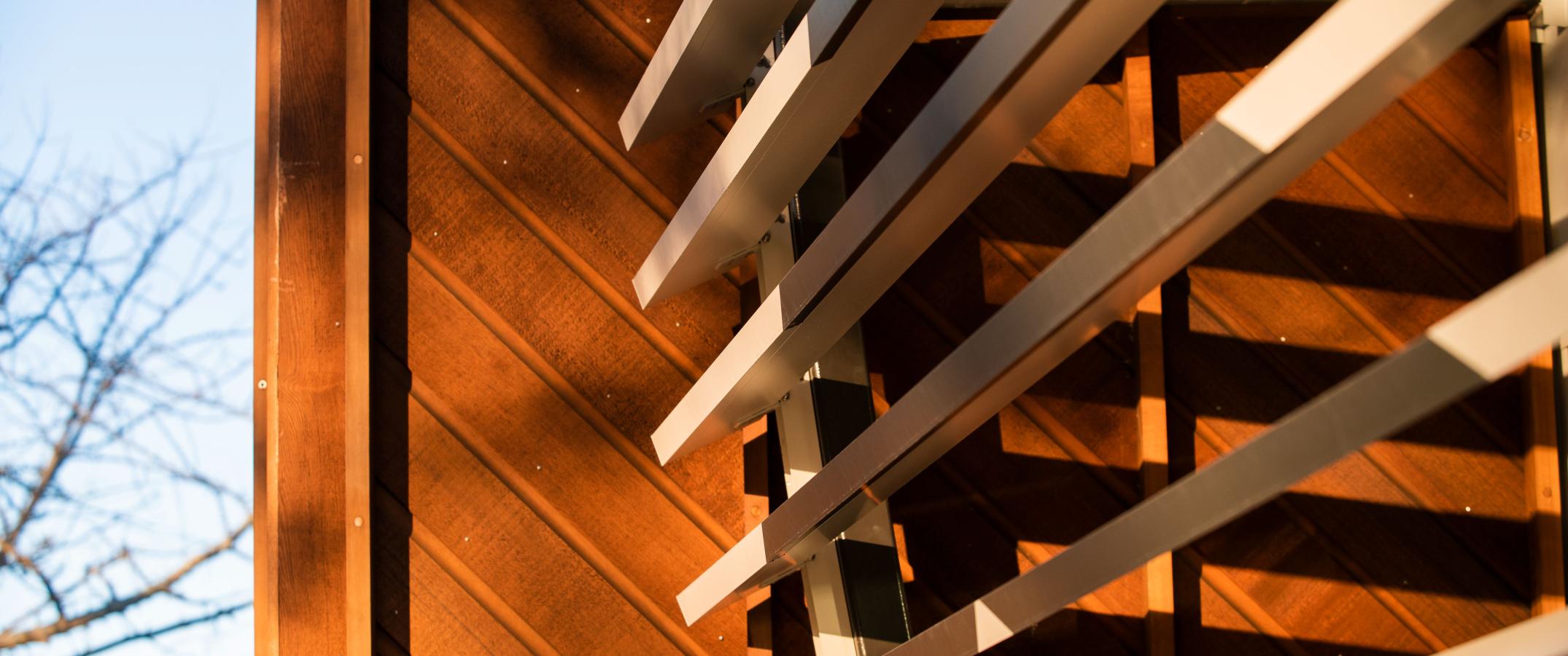
Adding a bank of louvres to the exterior is a particularly useful method for shading as it means the windows can remain operable, allowing for air exchanges which can flood the interior with the positive effect of fresh oxygen. The louvres themselves can be arranged in multiple configurations and powder-coated to suit the design of the building or even the brand of the building owners/occupants, as was the case with the recent Altus warehouse project.
Perforated & Expanded Sheet Metal
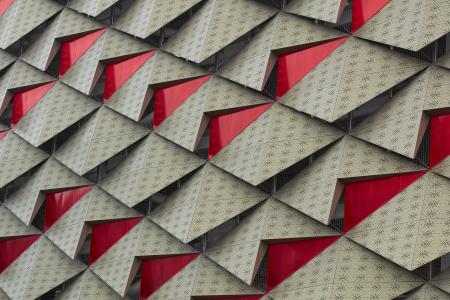
Taking shading and solar control even further is dapple. An extraordinary range of perforated sheet metal, dapple doesn’t only control shade, it transforms it. Thoughtfully designed, each pattern showcases a choreography of light, performed by deep shadows and dancing sunlight. The effect is entrancing, ever-changing and totally unique.
Fabric Facades
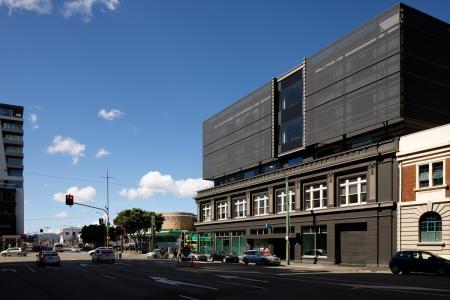
Finally, the use of a fabric facade (where a stretched fabric material in surface tension to form a three-dimensional surface) introduces a low cost option that comes with near complete creative freedom. Depending on the fabric colours and level of reflectivity, up to 80% of the solar gain can be blocked or absorbed by the fabric membrane.