The Facade Wind Noise Risk Matrix
When we provide design assistance, we need to know the design won't make a noise. To put it bluntly, we don't want to be liable. If we install balustrades on a hotel that makes a noise, guests will complain. Then the hotel will complain to the architect. Who will complain to us. Followed by us complaining to our accountants. And we definitely don't want to speak to them.
To mitigate against this, we've developed the facade wind noise risk matrix. It quantifies the risk of noise based on the probability of annoyance levels and wind gusts. For example, if a hotel has a balustrade next to the bedroom and is in a location likely to receive gusts over 100km/h - we know there's a need for some testing. Conversely, a ground floor perforated screen with perforated circles of 15mm won't require any testing.
If the risk is classified as extreme and no changes can be made to the design to change that, the matrix will recommend testing. It's the prudent thing to do and also the most cost effective. Which is exactly why wind testing was conducted before we installed a facade in a high-end apartment building on Kepa Road, Auckland.
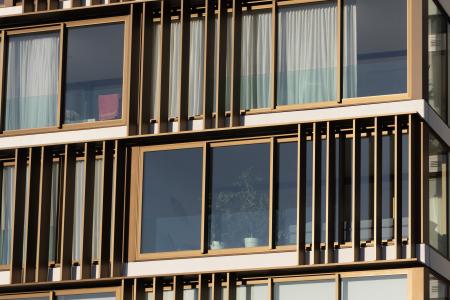
Outlook Apartments features a veil of 38mm anodised tubes at regular centres, spanning between the floor levels. With the tubing going around the corners and positioned close to the building, it jumped out as a likely candidate for significant vortex shedding.
This was confirmed when we ran a CFD analysis. What the analysis couldn't tell us was whether the vortex shedding would generate wind noise or not. That required a 1:1 scale wind tunnel test.
It had to be a 1:1 scale test too, as it's impossible to get the frequencies right when scaling down. With no facilities in New Zealand capable of doing this, we went to Australia and found a wind tunnel we could make work. It still needed the nozzles adapting and wasn't perfect as we required it to something it wasn't designed for.
The results led us to two conclusions. Firstly, the anodised tubes would not make noise, which was a huge relief.
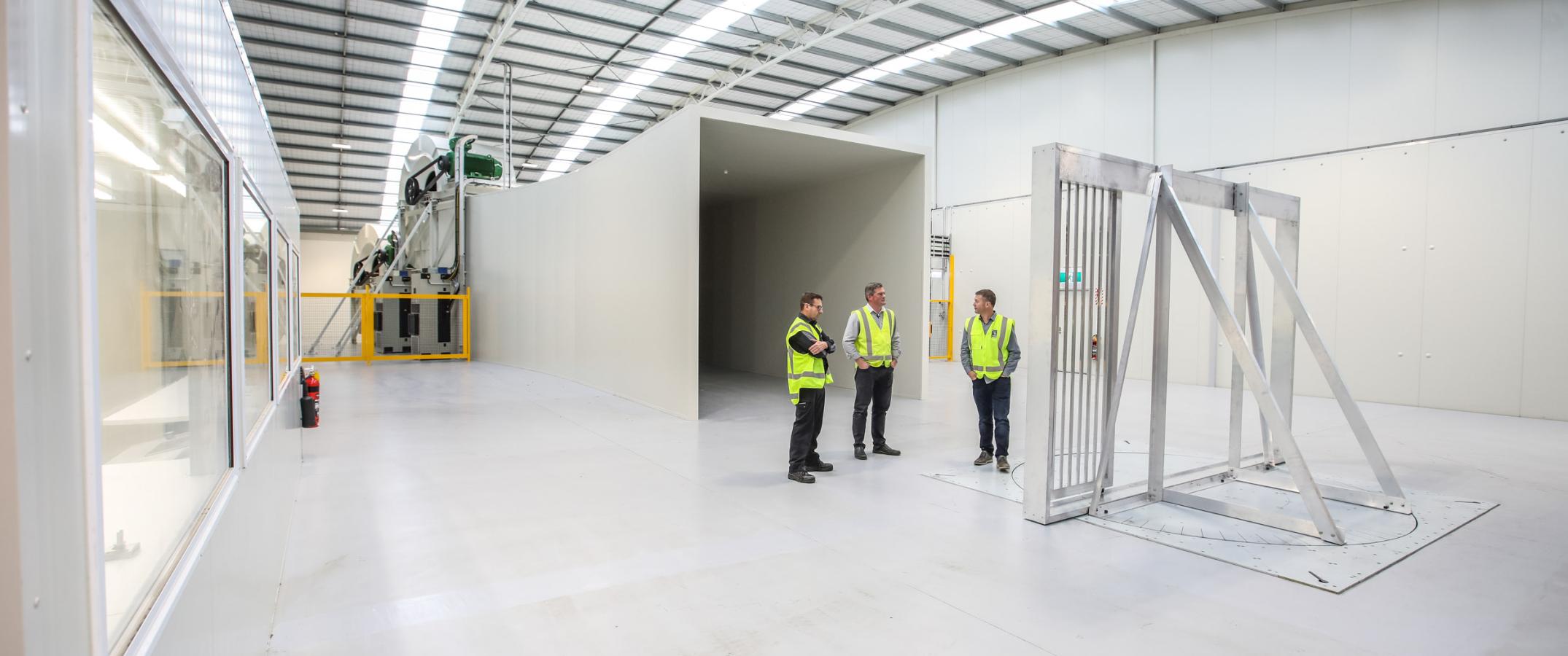
Secondly, we would need our own wind tunnel, designed to our specifications and able to fully test 1:1 scale models. As more and more medium and high-density housing, multi-level commercial complexes and high-rise buildings are constructed, the need for testing would only grow. To mitigate the risk of designs making a noise would require an imperfect testing regime overseas unless we built our own wind tunnel, here in Invercargill. So we did.